
Saginaw City Directory Holdings
Hoyt Library Local History & Genealogy is the main local starting point for historical-directory research. Its overview describes directories from 1866 to the present, while the library archive's finding aid describes many volumes from 1866 through 1936. Those statements describe the collection in different ways, so neither one proves an uninterrupted annual run. The finding aid also says that earlier volumes can be filed under East Saginaw or Saginaw City, with City of Saginaw used after the 1890 consolidation. Check the edition title and the printed municipality before deciding that a name is absent.
| Collection or lead | Years or extent | Where held | Access route |
|---|---|---|---|
| Hoyt city-directory overview | 1866 to present | Hoyt Library Local History & Genealogy | Ask staff, visit, phone, email, or write |
| Archive finding aid | Many directories, 1866 to 1936 | Hoyt Library Archives | Public finding aid and physical-request route |
| Genealogy Room examples | Verified partial list, 1872 to 1919 | Hoyt Genealogy Room | Check the container inventory by edition |
| R.L. Polk & Co. scans | 1883 and 1912 verified | Internet Archive, linked from Hoyt items | Public-domain page images, OCR, full text, PDF, and image files |
| NARA microfilm lead | 1928 to 1931 | National Archives listing | Microfilm reference, not a complete-run claim |
The Saginaw directory finding aid is the useful control point when an online search misses a year. It offers collection search plus From year and To year fields, and its organization and container views identify physical holdings. Its metadata also shows dates of 1886 to 2024 and an extent of 80 volumes. Treat those as catalog data that need checking against the item, not as a promised directory sequence.
The finding aid is visible in this Hoyt Library Archives collection record.
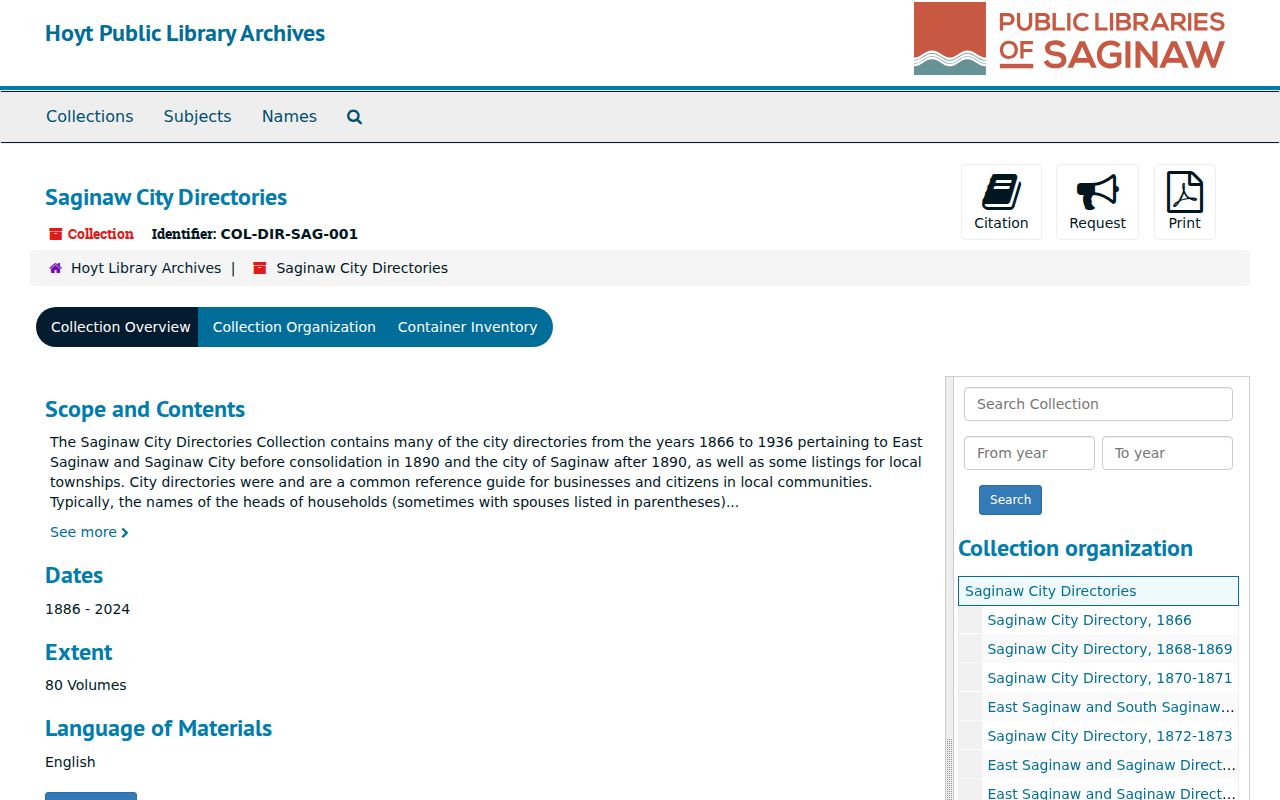
Use the collection views to record the edition title and the date range before requesting a volume or relying on an OCR match.
Note: The public finding aid does not verify a separate Saginaw reverse-directory series or a complete run of every annual edition.
Hoyt's Saginaw Directory Shelf
Hoyt is more than a directory shelf. The collection, created in 1960, includes more than 20,000 books, microforms, and periodicals, along with diaries, scrapbooks, business ledgers, and photographs. That range helps when an abbreviated directory line needs context. Hoyt also lists Saginaw newspapers on microfilm from 1853 to the present, local vital material for 1867 to 1900, cemetery records, county histories, atlases, plat books, and oral histories. A directory can suggest where to look next, while the supporting material may identify the source and date behind a later family claim.
Researchers can contact the library at 505 Janes Avenue by phone at 989-755-9827, email at plosgene@saginawlibrary.org, writing, or an in-person visit. The library specifically encourages an in-person visit for deeper work. Bring the name spelling, the address as printed, the approximate date, and any historical municipality label. Ask staff to distinguish a missing scan from a volume that is physically held but not digitized.
This Hoyt Library local-history collection page shows the local resource that supports Saginaw directory work.
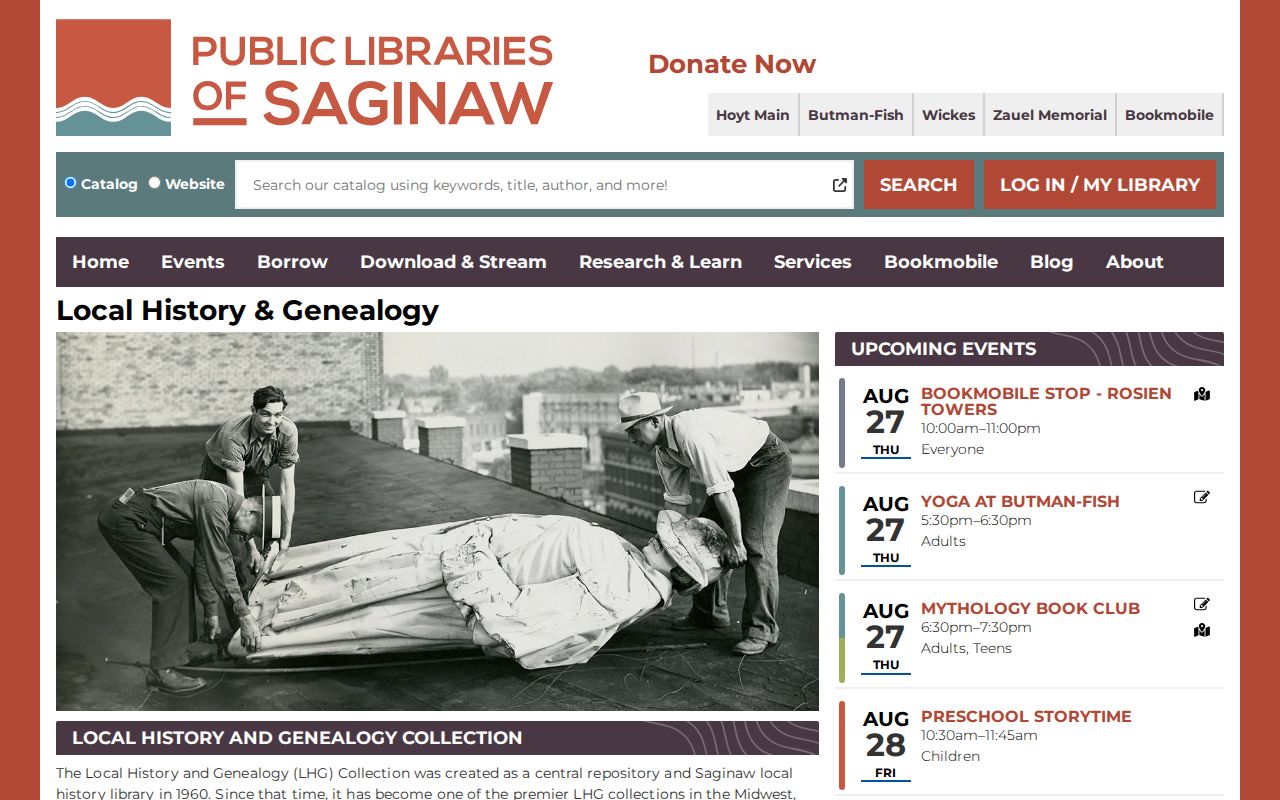
The library's broader holdings make it possible to test a directory lead against a newspaper, map, obituary, or archival item rather than treating one entry as the whole story.
East Saginaw Directory Labels
Historic place names are a practical search tool in Saginaw directories. The archive says the set covers East Saginaw and Saginaw City before the 1890 consolidation, then the City of Saginaw after it. City history also names Salina, South Saginaw, and Florence in the area's development. A search limited to the modern city name can therefore skip the edition or heading that holds the needed entry. Preserve the printed place name in notes instead of silently replacing it with a modern label.
For a pre-1890 question, search East Saginaw, Saginaw City, Salina, South Saginaw, and Florence when the evidence points there. For later material, add City of Saginaw. This is a place-name crosswalk, not proof that the locations were interchangeable. A street, address number, or directory heading may change even when the family connection is real. The historical directory is most useful when each result is recorded with its edition, page, and the place name actually printed.
Note: The 1890 consolidation changes directory labeling, so a modern Saginaw search term alone can leave an older household trail incomplete.
Digitized Saginaw Polk Volumes
Two item-level records make the digital trail concrete. Hoyt's 1883 item is a Genealogy Room book linked to a public-domain Internet Archive scan credited to R.L. Polk & Co. The 1912 item is likewise a physical Genealogy Room book with a public-domain R.L. Polk & Co. scan. Both scans provide OCR, full text, PDF, and image-oriented download choices. OCR helps find a surname, but a page image should settle initials, punctuation, and street abbreviations before anything is transcribed into a family record.
The digitized 1912 R.L. Polk & Co. Saginaw directory is an example of a searchable scan that still needs page-level checking.
When the OCR and the page image disagree, retain the image reading and note the uncertainty rather than forcing an exact name or address.
Note: The research verified 1883 and 1912 as digitized R.L. Polk volumes, not a complete publisher list for every Saginaw edition.
Reading a Saginaw Directory Entry
The collection description gives a sound inventory for reading a Saginaw directory entry: head of household, spouse in parentheses when present, street address, occupation or role, and other information. Each line is a snapshot from one edition. It can show how the directory presented a household, but it does not establish every resident, a continuing address, or a later change in status. Compare the entry with the next available edition and retain the edition date with every transcription.
| Name line | The named head-of-household entry or another person as printed in that edition. |
|---|---|
| Spouse notation | A spouse may appear in parentheses when the volume includes it. |
| Address | The street address printed for that edition, recorded without modernizing it. |
| Occupation or role | A historical descriptive field that can separate same-name people when compared with the original page. |
| Other notation | Keep unclear symbols as transcribed until the edition's own key or page context resolves them. |
- Criss-cross directory
- A directory arranged by street or address rather than chiefly by name. A separate Saginaw series and its years were not verified in the public finding aid.
- Householder entry
- The collection describes many entries through a head of household. Read that as the directory's presentation, not a complete household roster.
- Abbreviation key
- An edition-specific guide to shortened words or symbols. The exact Saginaw owner, renter, or widow notation was not verified from a page image during this research.
Do not infer an ownership mark, boarding status, or widow notation from a familiar symbol. The research did not verify a named sample line or the exact key for those marks. A clear image of the relevant page and its own introductory matter is the right place to resolve it.
Saginaw Directory Year Evidence
The Genealogy Room container inventory supplies a useful partial chronology. It names East and South Saginaw in 1872; East Saginaw and Saginaw editions in the 1870s and 1880s; Saginaw 1890-91, 1891-92, 1893-94, 1895-96, and 1897; a 1904-05 rural-route directory; and Saginaw editions in 1905, 1910 through 1914, 1916, 1917, and 1919. These are confirmed examples, not blank-space proof for years the public inventory does not list.
| 1866 | Hoyt's overview begins its city-directory coverage here. |
|---|---|
| 1883 | A verified R.L. Polk & Co. volume is digitized. |
| 1890 | The archive's description changes from pre-consolidation labels to City of Saginaw after this point. |
| 1912 | A verified R.L. Polk & Co. volume is digitized. |
| 1928 to 1931 | NARA lists Saginaw on microfilm for these years. |
The National Archives directory listing adds the 1928 to 1931 microfilm lead. It supplements the local shelves and scans, but it does not turn the surviving evidence into a continuous historical run.
Saginaw Directories and Obituaries
A directory address can be paired with Hoyt's obituary index when a household disappears, a surname changes, or several people share a name. The Saginaw obituary index contains more than 250,000 notices from The Saginaw News, according to the Public Libraries of Saginaw. Search spelling variants and a narrow date window, then record the newspaper, date, and page when an image or library copy is obtained. The index is a lead. It does not mean every notice is digitized or that a result proves a complete address history.
The public obituary search is shown in this Saginaw obituary index image.
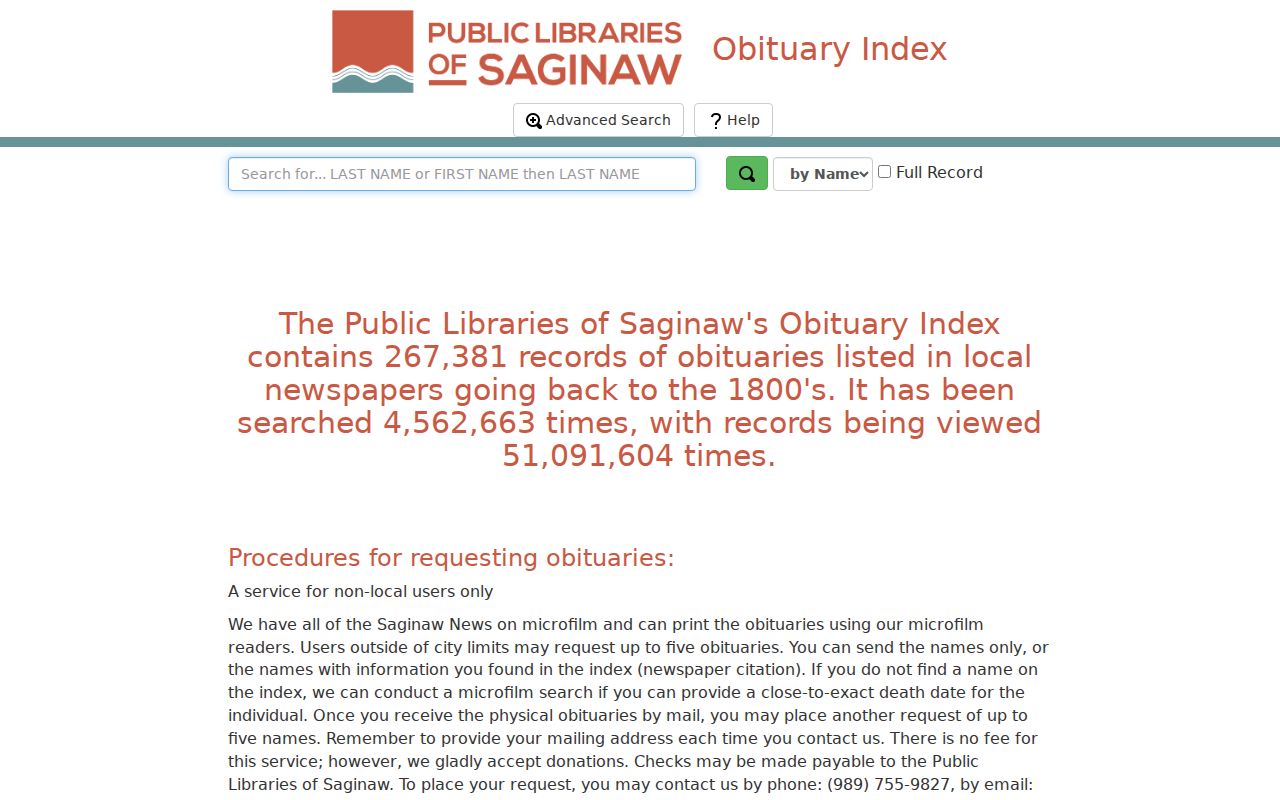
Use the newspaper result to test the date and identity of a directory lead, then return to the closest directory editions rather than assuming the entry identifies every relative.
Note: An obituary can provide community context, but it should be checked against the original newspaper item or a library-supplied copy.
Tracing Saginaw Directories Forward
Family-history work is strongest when it follows the paper trail in small steps. Start with the first verified Saginaw directory appearance, then compare the next available editions without assuming that every year survives. Pairing directory dates with census years can bridge wide intervals, while the library's newspapers, cemetery records, biographies, and obituary index can test a move or an apparent disappearance. A missing name may mean a move, a change in spelling, a different municipality heading, an omitted household, or an unavailable edition. It is not a conclusion by itself.
- Find the first confirmed name, address, and printed municipality in a directory edition.
- Move through the nearest available editions, logging the page, street form, spouse notation, and any change in the name line.
- Check the same period under East Saginaw, Saginaw City, or another historical label when the date calls for it.
- Pair the directory sequence with the relevant census period and then test an apparent break against a newspaper, obituary, cemetery, or archival lead.
- Label the last confirmed entry and the next unconfirmed lead separately, preserving the source and date for both.
When the goal changes from a historical household to a current official record, use the focused verification routes on the Saginaw resident lookup page rather than treating an old directory line as a present-day result.
Saginaw Directory Research Gaps
When Hoyt's finding aid or a scan does not answer the question, the Castle Museum and Historical Society of Saginaw County is another local-history contact at 500 Federal Avenue. Its public information gives visitor details and a history-preservation mission, but it did not expose a detailed archival finding aid, resident name index, or record-level access rules during research. Ask specifically about photograph, manuscript, business, neighborhood, map, or family collections. Those are leads for staff discussion, not evidence of a searchable person record.
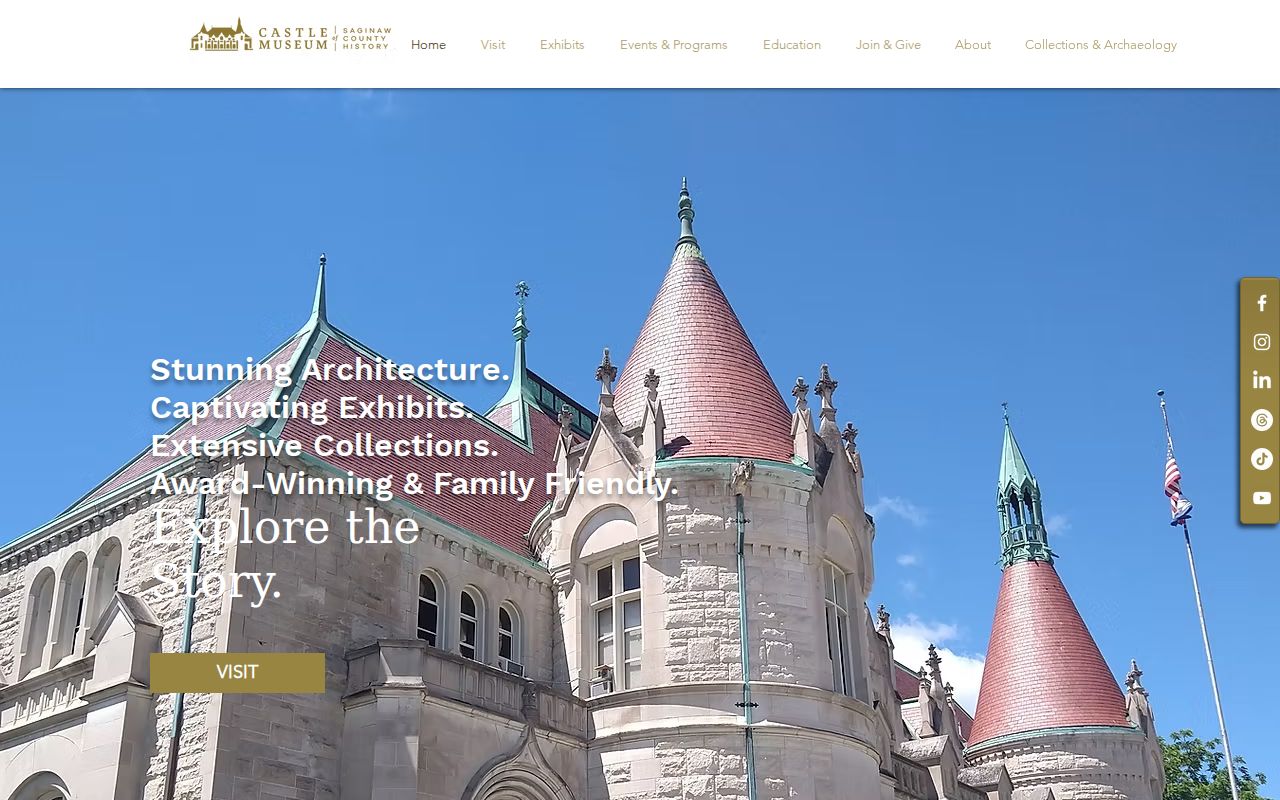
The museum's public historical-resource page appears in this Castle Museum listing.
The museum can widen the historical context, while the library finding aid and original directory pages remain the better way to document a particular entry.